

Scones: The Devon Cornwall Divide
Jam first or cream first? It is a question that divides two neighbouring counties, sparks lively debate among visitors, and remains one of Britain's most enduring culinary rivalries. The Devon vs Cornwall cream tea debate has raged for generations, turning a simple scone with jam and clotted cream into a matter of regional pride.
Cross the River Tamar, the historic boundary between Devon and Cornwall, and you'll discover that what appears to be a simple afternoon treat is deeply rooted in local traditions, history, farming heritage, and identity.
In Cornwall, a traditional Cornish cream tea consists of a freshly baked scone topped first with strawberry jam and then finished with a generous spoonful of Cornish clotted cream.
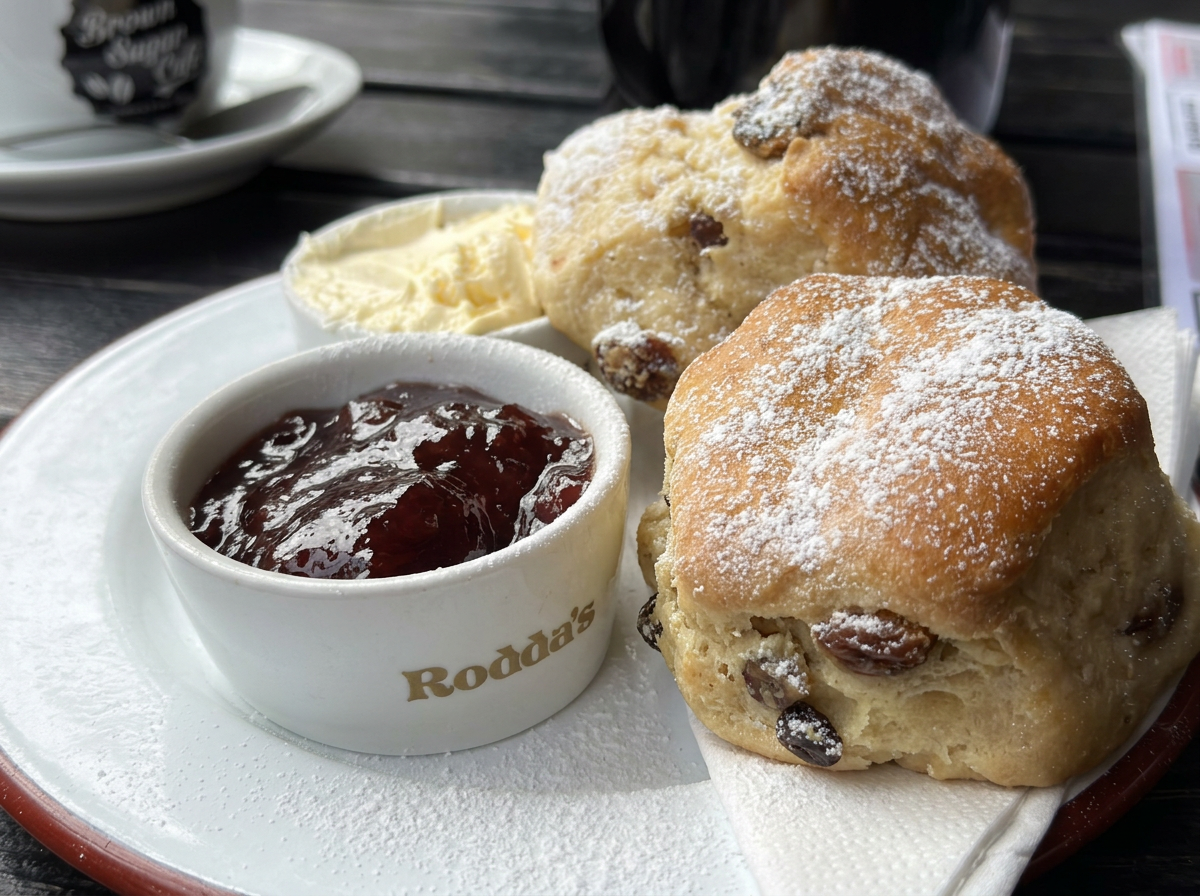
Cream Tea - cream or jam first?
In Devon, the method is reversed. Here, thick Devonshire clotted cream is spread onto the scone first, much like butter, before being crowned with jam.
For both counties, theirs is the correct way. For visitors enjoying a cream tea in the West Country, it is often best not to choose sides.
Tavistock Abbey and the Origins of the Cream Tea
Many people associate cream teas with Cornwall, but Devon has a compelling claim to being the birthplace of the cream tea tradition. At the heart of that story stands Tavistock, an ancient market town on the edge of Dartmoor. Famous for its UNESCO-listed mining heritage, bustling Pannier Market, and the remains of Tavistock Abbey, the town has been shaped by nearly a thousand years of history. According to local tradition, the origins of the cream tea can be traced back to the monks of Tavistock Abbey in 997 AD. Following Viking raids that damaged the abbey, workers helping rebuild the monastery were reportedly rewarded with bread, clotted cream, and preserves.
While tea itself would not arrive in England for another six hundred years, the foundations of today's cream tea were already present. The monks would likely have served thick "clowted" cream alongside rustic bread and honey rather than the scones and strawberry jam familiar today.
Nevertheless, the essential ingredients of the modern cream tea were there:
Freshly baked bread
Rich clotted cream
Sweet preserves
Many food historians regard this as one of Britain's earliest recorded cream tea traditions.
Clotted Cream: The Secret Ingredient Behind Every Great Cream Tea
Whether you prefer a Devon cream tea or a Cornish cream tea, the true star of the experience is undoubtedly clotted cream. Produced from rich local milk, clotted cream is synonymous with the landscapes of Devon and Cornwall. Rolling green hills, fertile river valleys, ancient hedgerows, and lush pastures create ideal grazing conditions for dairy cattle. For centuries, farmers across the South West have refined the process of making clotted cream. Fresh milk is gently heated before being left to cool slowly, allowing the cream to rise and develop its distinctive golden crust.
The result is one of Britain's most luxurious foods. Thick, velvety and wonderfully indulgent, clotted cream transforms even the simplest homemade scone into something extraordinary. Its rich texture and delicate sweetness explain why visitors searching for an authentic Devon cream tea or Cornish cream tea travel from across the world to experience it.
A Childhood Memory of Devon Cream Tea
For me, the taste of clotted cream is inseparable from childhood memories of Devon. My grandmother, Elizabeth, lived in the tiny village of Stockleigh Pomeroy, deep in the Devon countryside. Visits often included calls at a nearby farm where tubs of freshly made clotted cream sat cooling in the dairy.
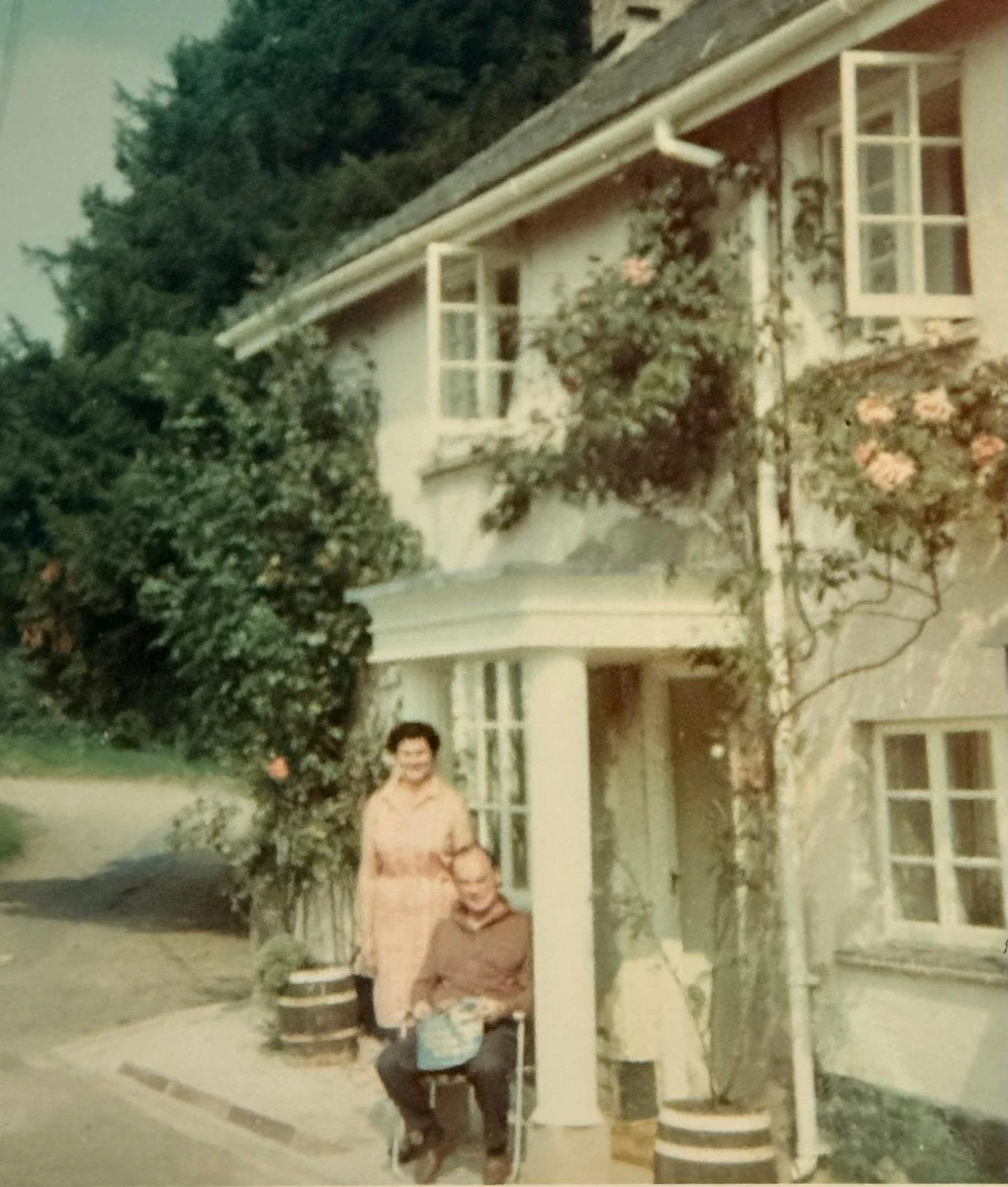
Grandma and Grandpa Armstrong, Stockleigh Pomeroy
The cream was sublime. Thick enough to hold its shape, with a glossy golden crust on top and a rich buttery interior beneath, it carried the unmistakable flavour of the surrounding countryside. Back in my grandmother's kitchen, warm scones would emerge from the oven and the ritual would begin. There was never any discussion about which came first. Grandma was firmly in the Devon camp. The clotted cream was spread generously across the warm scone like butter before a spoonful of homemade strawberry jam was added on top. Looking back, it seemed the most natural thing in the world. Perhaps that was simply because it was the way she had always done it.
Today, every cream tea evokes those memories of Devon farmhouses, warm kitchens, and long summer afternoons.
The History of Afternoon Tea and Cream Tea
Although cream tea traditions may stretch back to medieval Devon, the cream tea we recognise today developed gradually over several centuries. Scones emerged during the sixteenth century before evolving into the lighter, softer baked goods enjoyed today. The invention of baking powder during the nineteenth century helped produce the tall, fluffy scones that became perfect companions for cream and jam. At the same time, strawberry jam became more widely available as sugar became increasingly affordable.
The final ingredient in the cream tea story arrived during the Victorian era. In the 1840s, Anna Maria Russell, Duchess of Bedford, began taking tea and light refreshments during the long gap between luncheon and dinner. What started as a private solution to afternoon hunger quickly became a fashionable social event among Britain's upper classes. Thus Afternoon Tea became a national institution.
For the aristocracy and growing middle classes, meals were often widely spaced throughout the day. Breakfast might be served in the morning, luncheon at midday, while dinner, particularly in fashionable households, could be delayed until eight or nine o'clock in the evening. Afternoon tea bridged this gap and quickly became an opportunity for socialising, entertaining guests, and quietly displaying wealth, refinement, and good manners.
Tea itself was once an expensive luxury, imported from China and later India, while fine china, silver tea services, imported sugar, and delicate cakes were symbols of status. Hosting afternoon tea became an important part of upper-class society, particularly for women, who used gatherings to strengthen social connections and discuss local affairs.
By the Edwardian period, afternoon tea had become firmly established as a cultural institution. Grand hotels, country houses, and seaside resorts proudly offered elegant tea services, complete with finger sandwiches, pastries, cakes, and freshly baked scones accompanied by rich clotted cream and fruit preserves.
While formal afternoon tea remained associated with privilege and social standing, the simpler cream tea became increasingly popular across all levels of society, particularly in Devon and Cornwall. Railway excursions brought growing numbers of visitors to the South West, where holidaymakers could enjoy local produce and discover the now-famous combination of warm scones, strawberry jam, and clotted cream.
In many ways, today's cream tea represents the democratisation of what was once an elite social ritual. What began as a fashionable custom in aristocratic drawing rooms evolved into one of Britain's most beloved culinary traditions, enjoyed by everyone from dukes and duchesses to walkers fresh off the moors of Dartmoor and the coastal paths of Cornwall.
What Is the Difference Between High Tea, Low Tea and Cream Tea?
One of the most common misconceptions concerns the difference between High Tea and Afternoon Tea.
Afternoon Tea (Low Tea)
Served during the afternoon from low drawing-room chairs, Afternoon Tea traditionally included:
Tea
Finger sandwiches
Cakes
Pastries
Scones with jam and clotted cream
High Tea
High Tea was originally the evening meal of working households and was eaten at a dining table, or "high" table. It was a substantial meal featuring:
Meat dishes
Bread
Cheese
Pickles
Tea
Cream Tea
A traditional West Country Cream Tea is much simpler:
Freshly baked scones
Strawberry jam
Clotted cream
A pot of tea
Nothing more is needed.
Traditional Devon Scone Recipe
Ingredients
450g self-raising flour
2 tsp baking powder
75g butter
50g caster sugar
2 large eggs
225ml milk
Pinch of salt
Method
Preheat your oven to 220°C (200°C fan).
Rub the butter into the flour until the mixture resembles fine breadcrumbs.
Stir through the sugar and salt.
Beat the eggs and combine with most of the milk.
Mix gently to form a soft dough.
Roll to approximately 3cm thick.
Cut into rounds and place on a baking tray.
Brush the tops with the remaining milk.
Bake for 12-15 minutes until risen and golden brown.
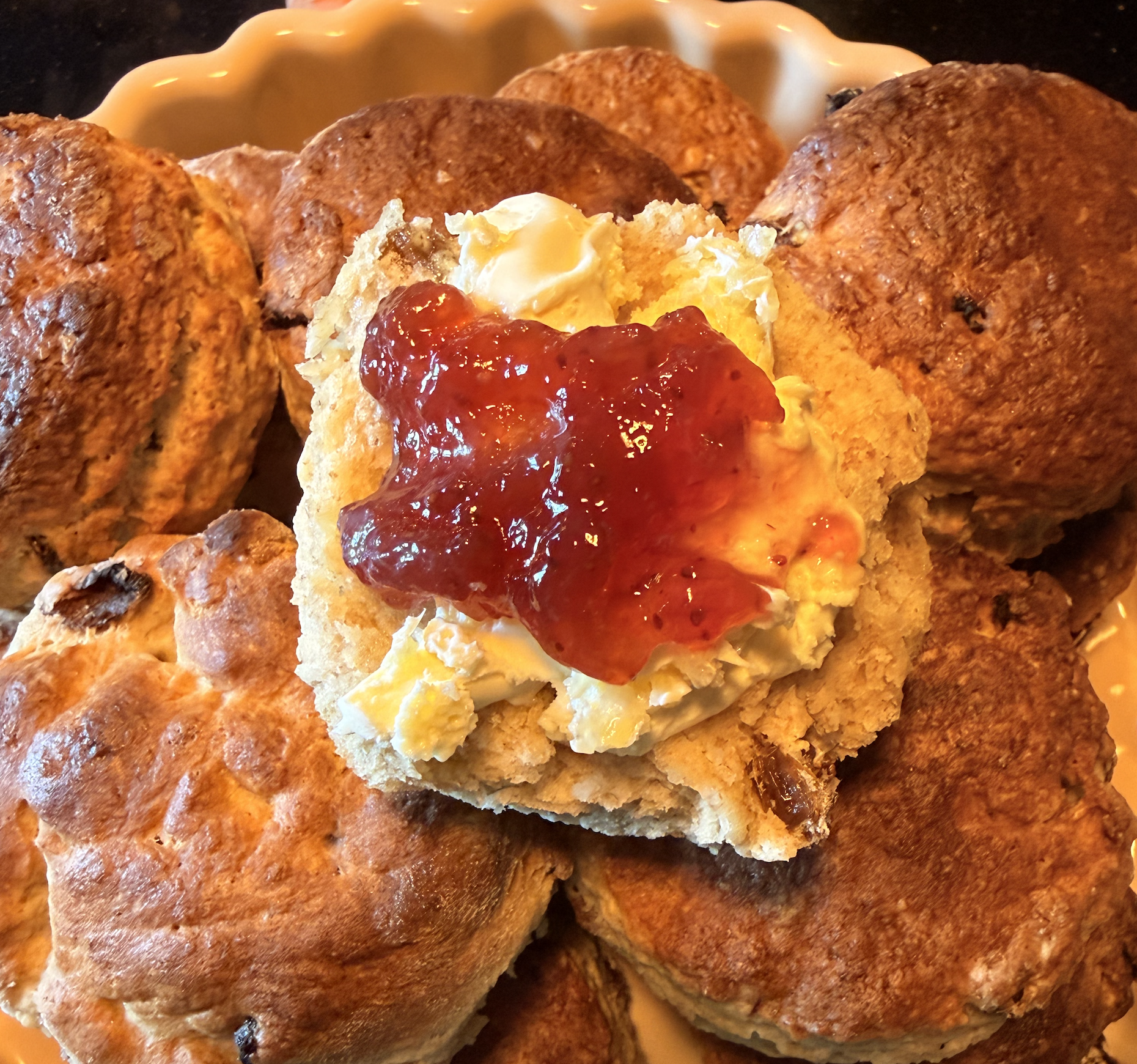
Freshly baked scones, the Devon way.
Serve warm with strawberry jam and plenty of clotted cream.
The Verdict: Jam First or Cream First?
So, which county is right? Should a cream tea be enjoyed the Cornish way, with jam first? Or the Devon way, with cream spread first like butter? Whenever I find myself in Tavistock, wandering through its ancient streets and reflecting on the town's claim to the origins of the cream tea, I lean towards Devon's approach. But the truth is that both traditions celebrate the same thing: exceptional local produce, centuries of farming heritage, and the joy of sharing good food with good company. Perhaps that is why the Devon-Cornwall cream tea debate endures.
The real secret to a perfect cream tea is not whether the jam or cream comes first. It is that the scones are still warm, the clotted cream is generous, and there is enough tea in the pot for a second cup.