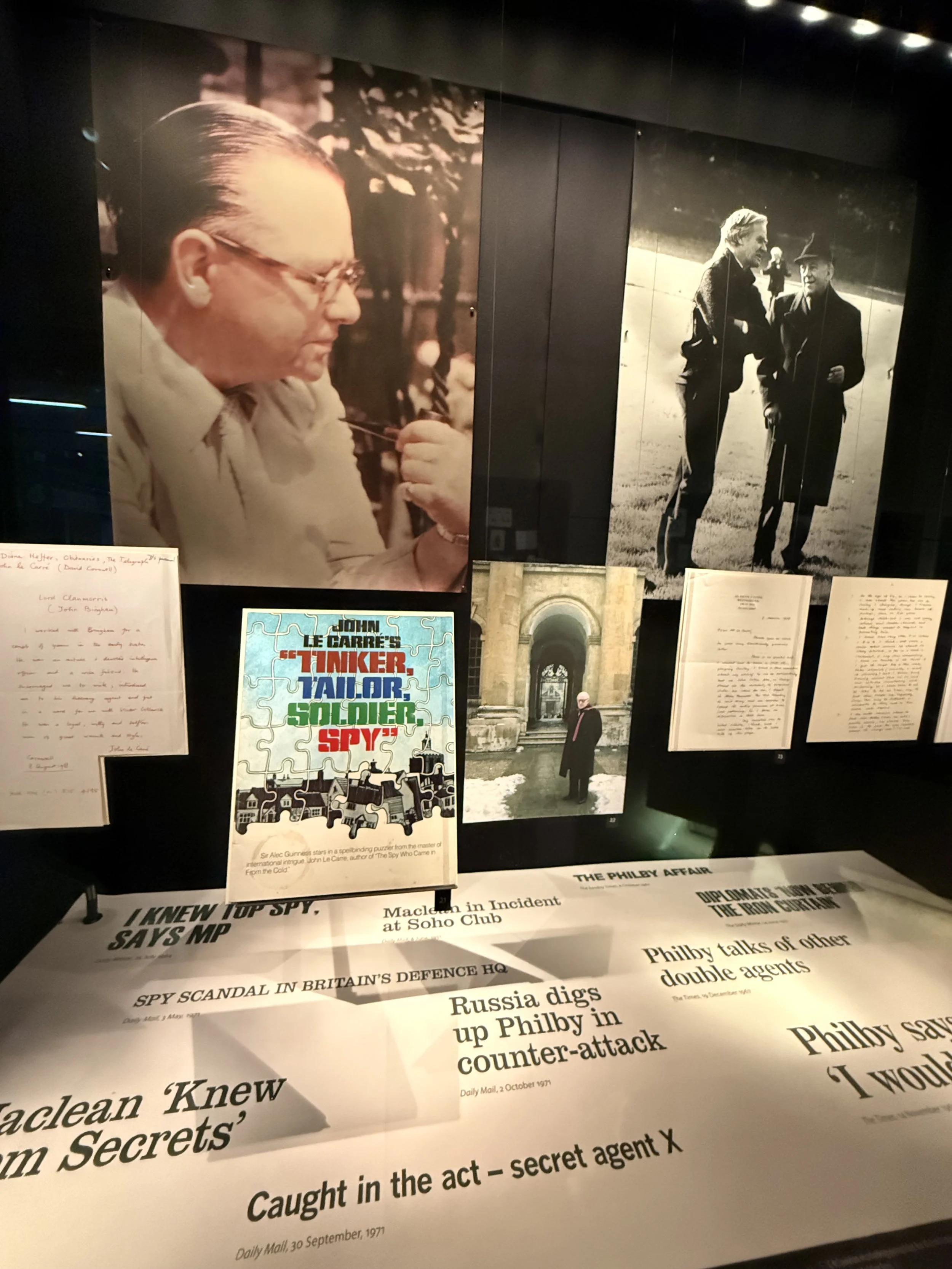
David Cornwell: The Man Behind John le Carré
A Life in Espionage, Literature, and the Landscapes of Oxford and Cornwall.
In 1982, Sir Alec Guinness captivated audiences as George Smiley in the BBC adaptation of Smiley’s People. The performance—cool, knowing, quietly devastating—helped define the public imagination of the Cold War. The implacable gaze from behind thick glasses certainly shaped my ideas of spies and MI5 agents. But behind the character, behind the intricate webs of betrayal and human frailty, stood the writer who created him: John le Carré, the literary identity of David John Moore Cornwell (1931–2020).
John le Carré rewired spy fiction, stripping away glamour to expose the grubby machinery of intelligence—bureaucracy, moral compromise, and the human toll of loyalty. To read him is to read a life forged by a con man father, honed in Oxford’s shadowed corridors, and rooted in the windswept wilds of Cornwall.
A Childhood of Secrets: The Early Life of David Cornwell
Born in Poole, Dorset, on October 19, 1931, Cornwell grew up in a household marked by instability. His father, Ronnie Cornwell, was a charming and theatrical con artist; his mother left when David was just five years old. Later, he would describe life with Ronnie as an “apprenticeship in espionage”—a childhood spent reading rooms, assessing motives, and surviving psychological unpredictability. These themes would become the emotional bedrock of his fiction.
Oxford: An Education in Languages—and Intelligence
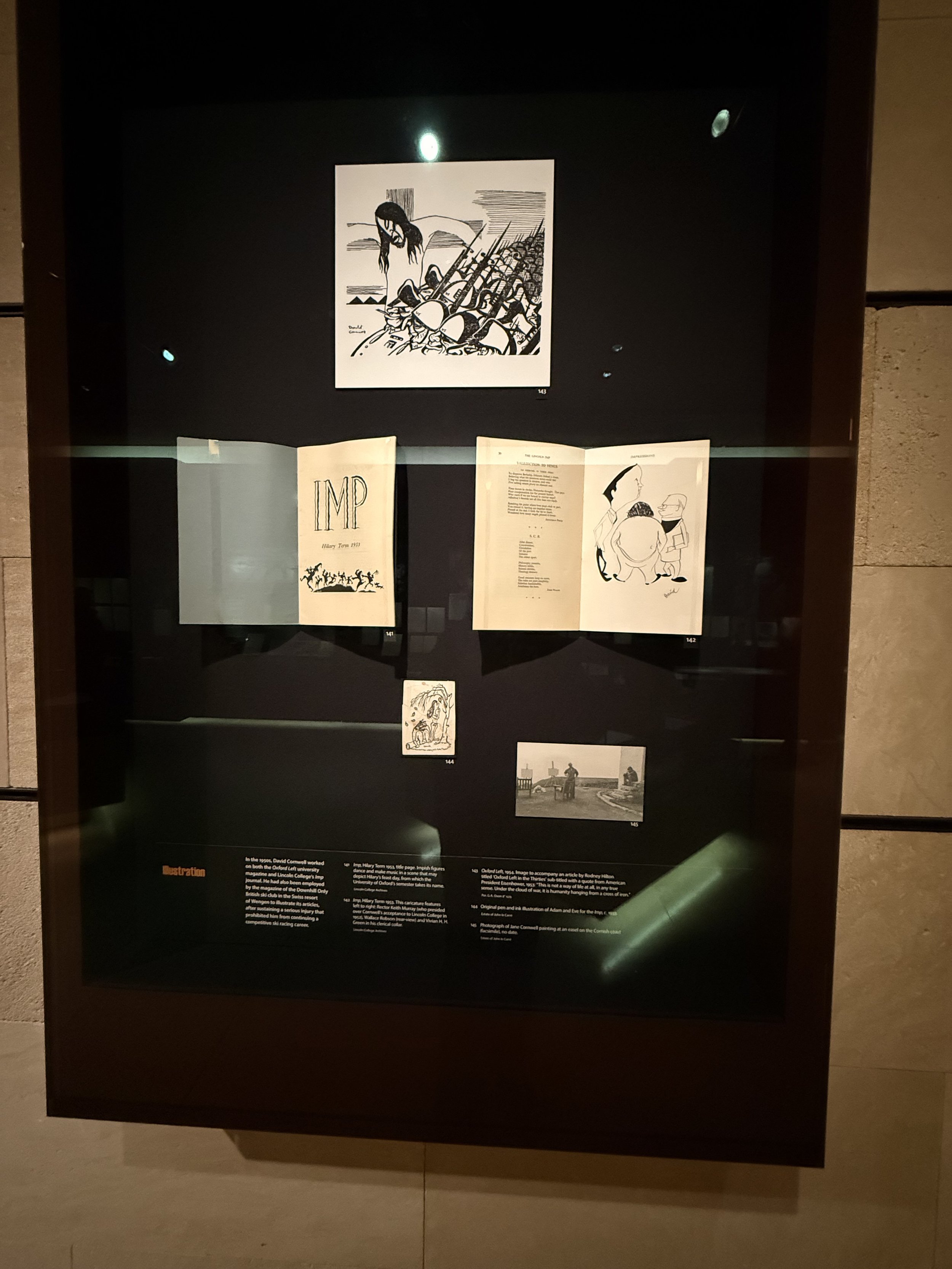
Cornwell’s route to Oxford was anything but straightforward. Before arriving at Lincoln College in 1952 to read Modern Languages, he had already studied briefly at the University of Bern and served in the British Army Intelligence Corps in Austria, where he interrogated individuals crossing the Iron Curtain. Even as an undergraduate living in Chapel Quad, his links with intelligence work continued.
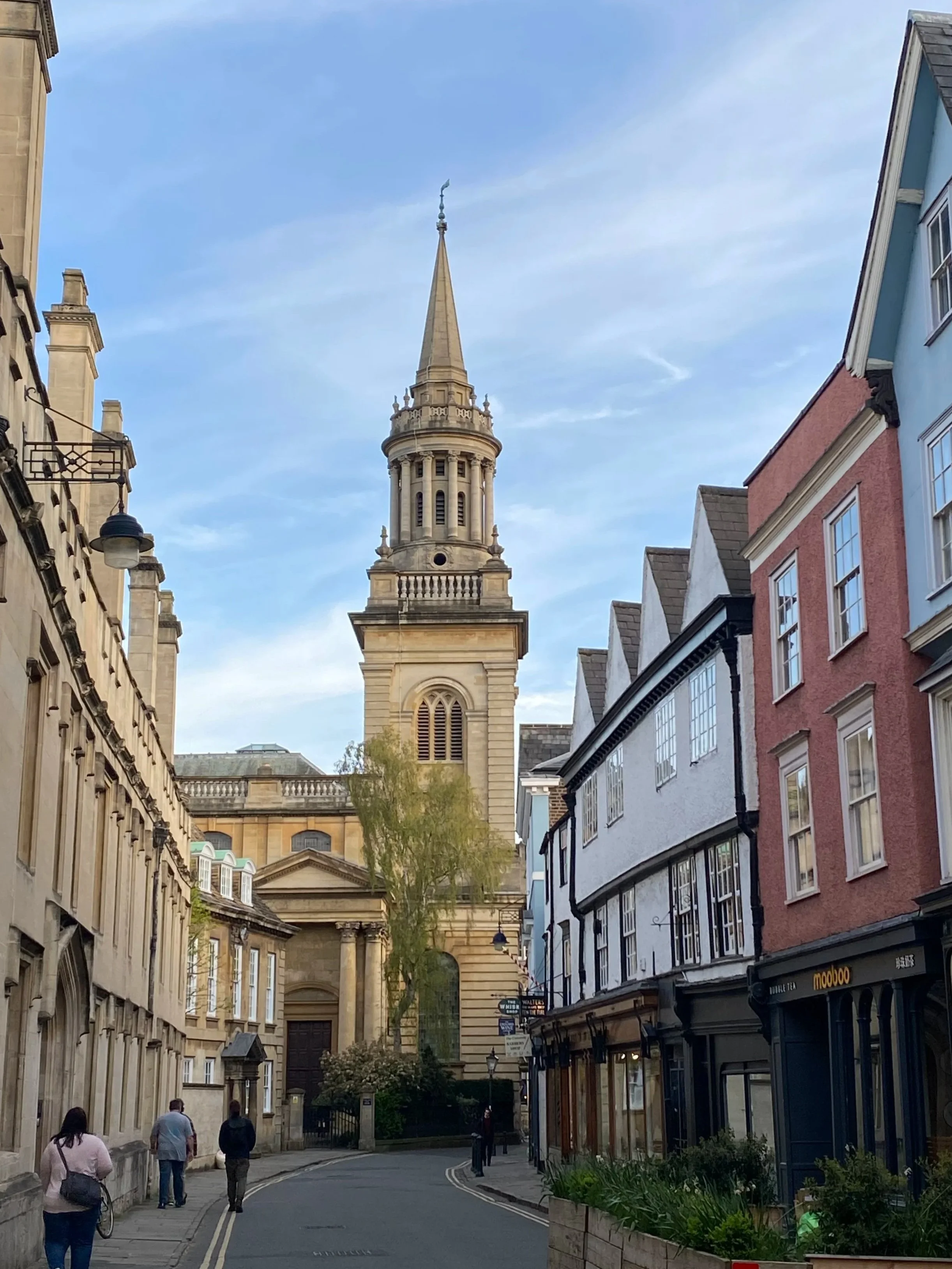
Lincoln College, Turl Street, Oxford.
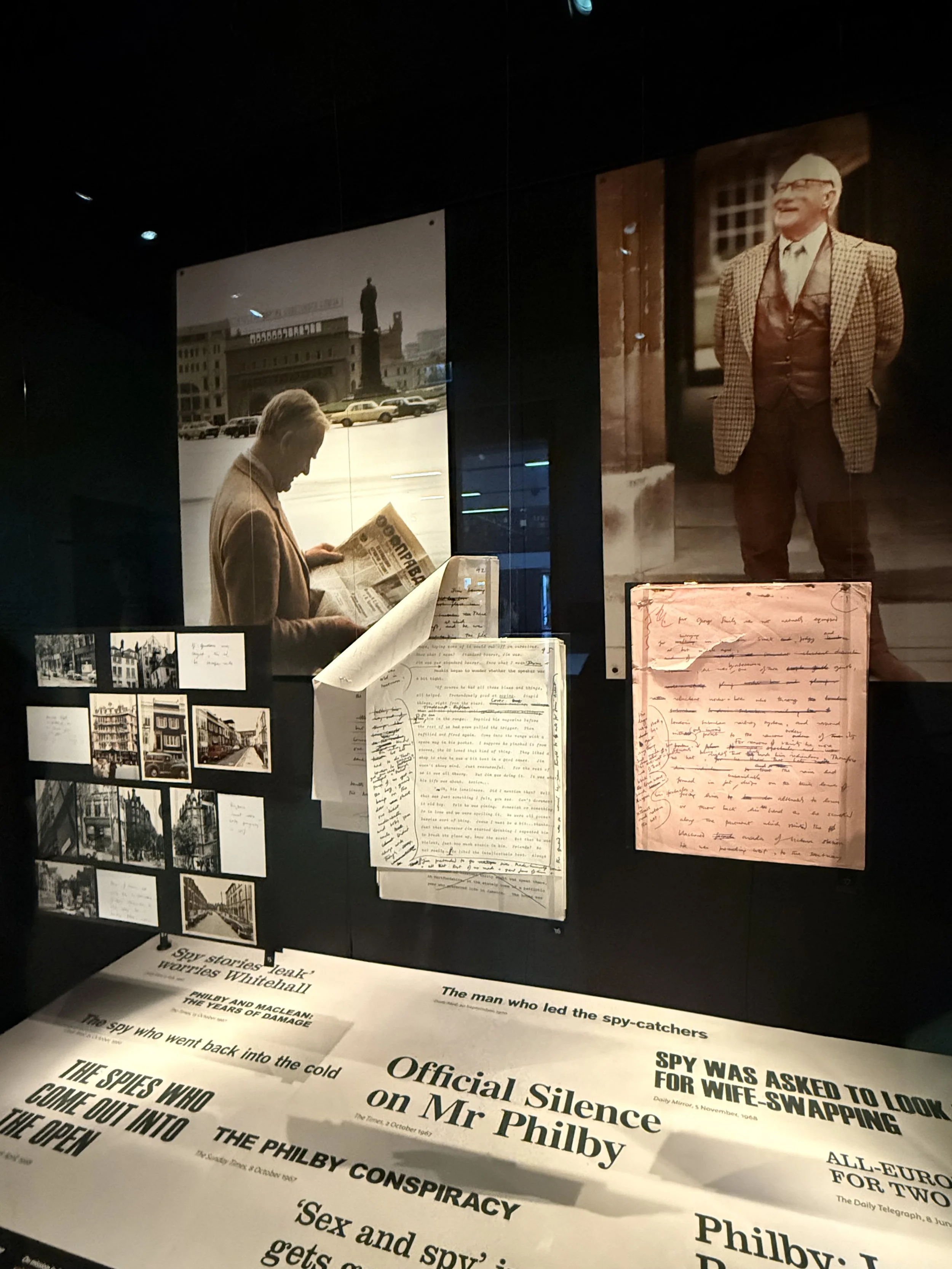
He interrupted his degree to teach at Edgarley Hall, returned to Oxford, and graduated in 1956 with a First. After another teaching stint—this time at Eton—he formally entered MI5 in the 1950s, and by 1959 he had moved to MI6, serving in Bonn and Hamburg. Cornwell's time in intelligence came to an end when notorious double agent Kim Philby betrayed British agents' covers to the KGB. Philby's actions exposed Cornwell’s work in Bonn, West Germany.
It was during his time in Bonn that he began writing, scribbling drafts on train commutes. Because civil servants couldn’t publish under their own names, he invented John le Carré—a pseudonym that would soon eclipse the man behind it.
His early novels, including Call for the Dead (1961), introduced readers to George Smiley, the anti-Bond: bespectacled, watchful, morally wounded.
Then came the turning point.
Breakthrough and Literary Mastery
In 1963, The Spy Who Came in from the Cold exploded onto the literary scene. Bleak, taut, and devastatingly human, it became an international bestseller. The success forced Cornwell—still technically a serving intelligence officer—to leave MI6 and become a full-time writer.
Across 26 novels, he refined a literary universe dense with betrayal, bureaucratic cynicism, and haunted characters. Major works include:
The Looking Glass War (1965)
Tinker Tailor Soldier Spy (1974)
The Honourable Schoolboy (1977)
Smiley’s People (1979)
The Constant Gardener (2001)
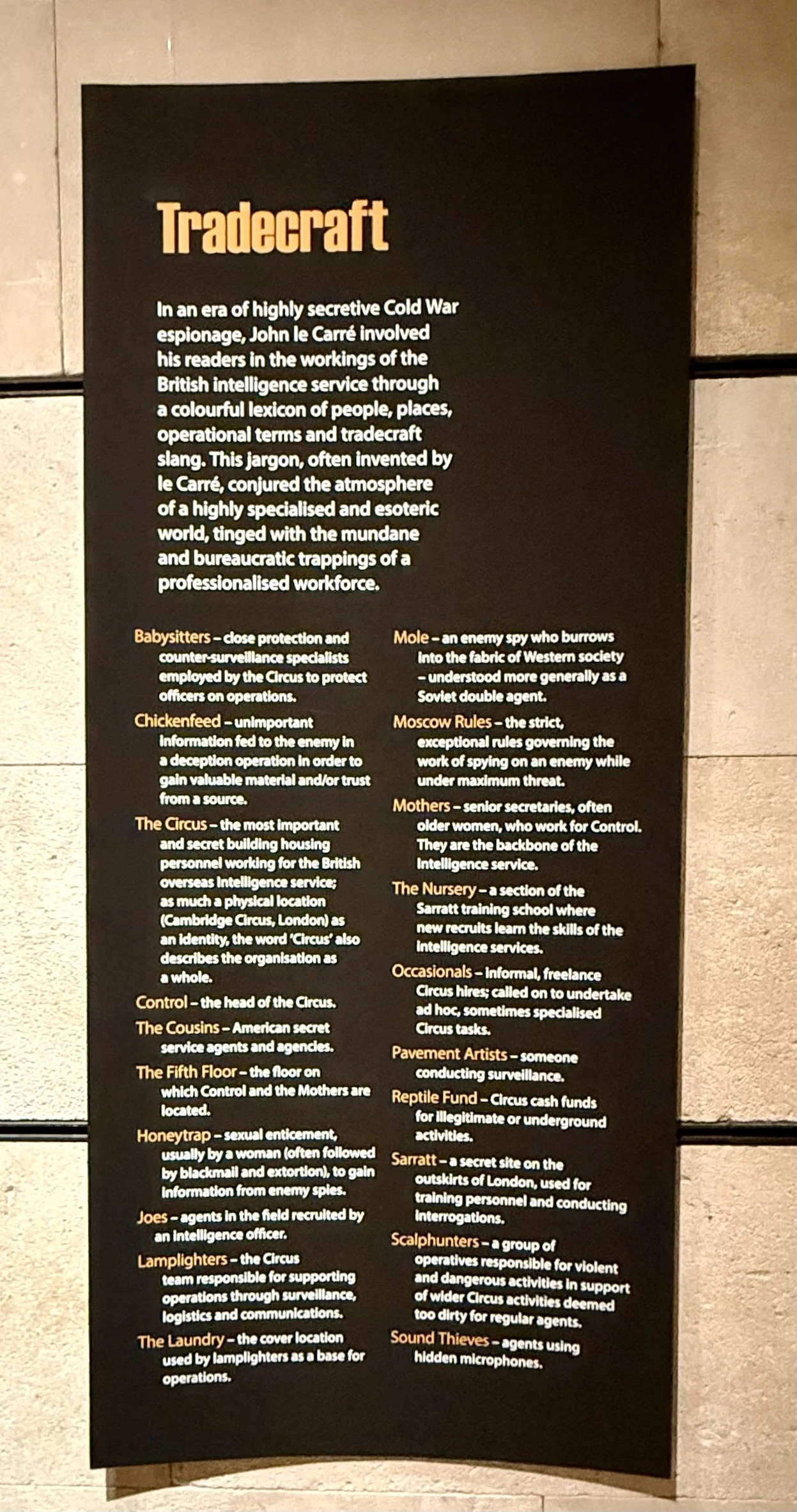
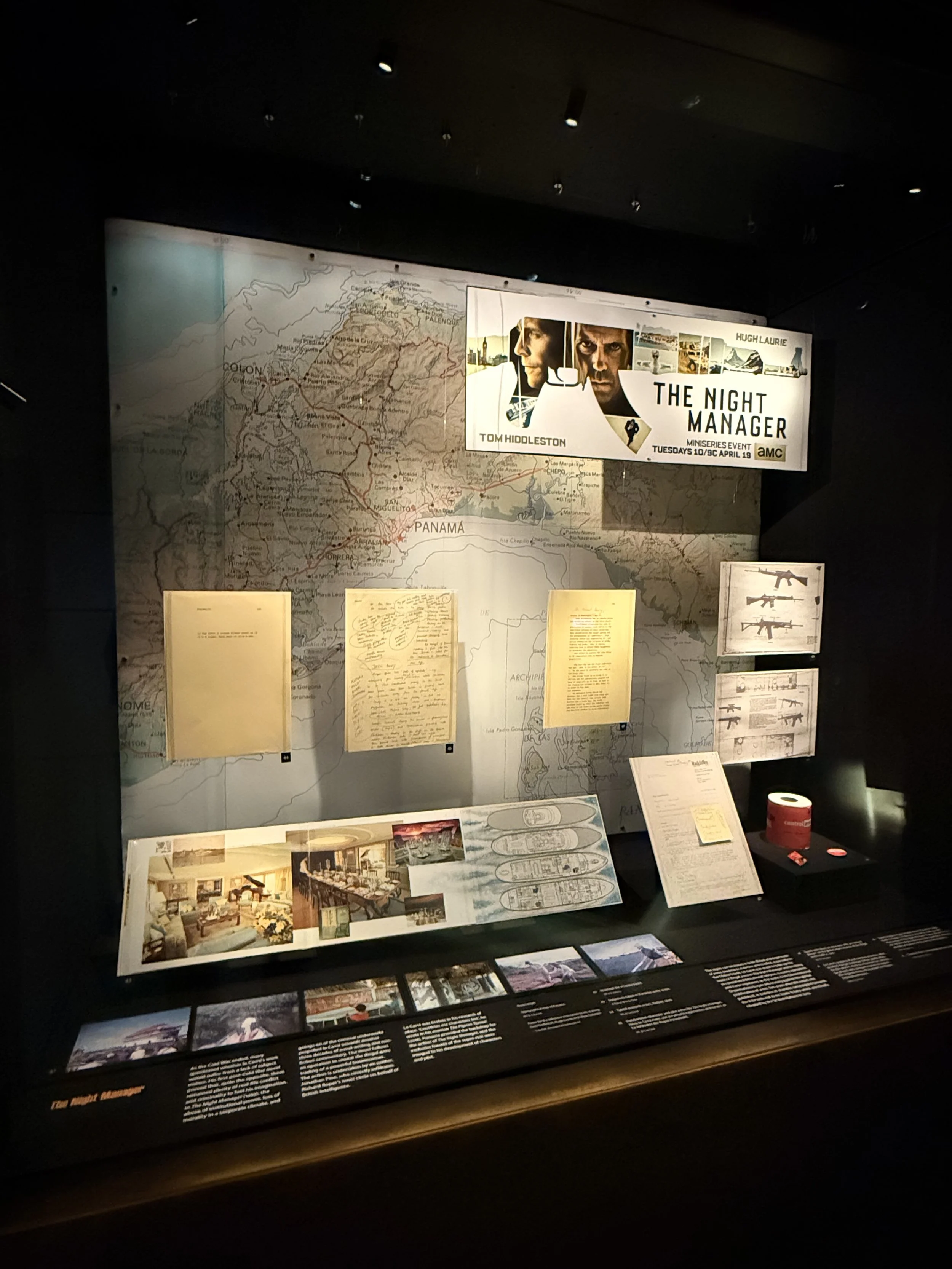
His 2016 memoir, The Pigeon Tunnel: Stories from a Life, offered rare glimpses into his methods—what the Bodleian Libraries exhibition Tradecraft reveals as a writer’s toolkit borrowed from espionage: interrogation, impersonation, meticulous research, and networks of informants. His “chameleon childhood,” as he called it, had prepared him well.
Throughout his career, he remained fiercely independent, often criticizing British political hypocrisy and refusing honours and literary prizes.
Cornwall: A Place of Refuge, Inspiration, and Activism
Though Cornwell’s name is global, his roots in Cornwall run deep. In the late 1960s, he bought and restored a set of three derelict fishermen’s cottages on the cliffs between Lamorna and Porthcurno, near St Buryan. The home—Tregiffian Cottage—became his sanctuary for more than 50 years.
Perched above one of Britain’s most dramatic coastlines, the cottage gave him both solitude and perspective. Cornwall, he often said, offered a vantage point from which to observe British politics at a distance—geographically and philosophically. Many of his later novels were written here, in a studio overlooking the sea.
Visits to Penwith this winter let me walk the coast from Porthcurno to Land’s End and onward to the mining cliffs of Botallack and Levant. The landscape is strikingly contrasted — black cliffs thrown against white spray, bright yellow gorse beside turquoise seas — at once wild, isolated and deeply inviting. Each path reveals a new drama: windswept headlands, hidden coves and remnants of industrial history that catch the light and the imagination. It’s the kind of place that pulls you into story—perfect for lingering, thinking and exploring. Cornwell walked these cliffside trails, voicing dialogue as he went; here, inspiration and discovery are never far away.
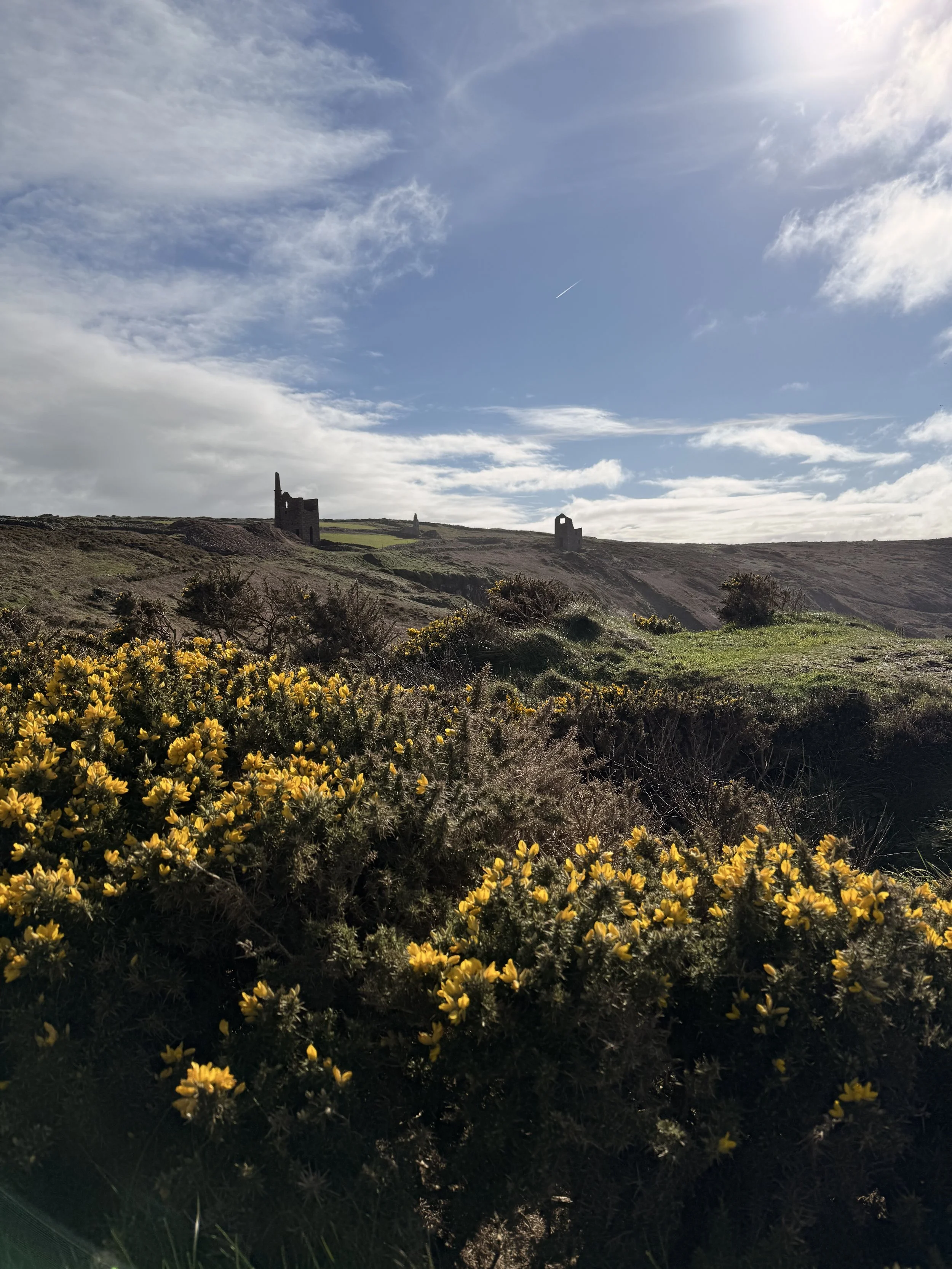
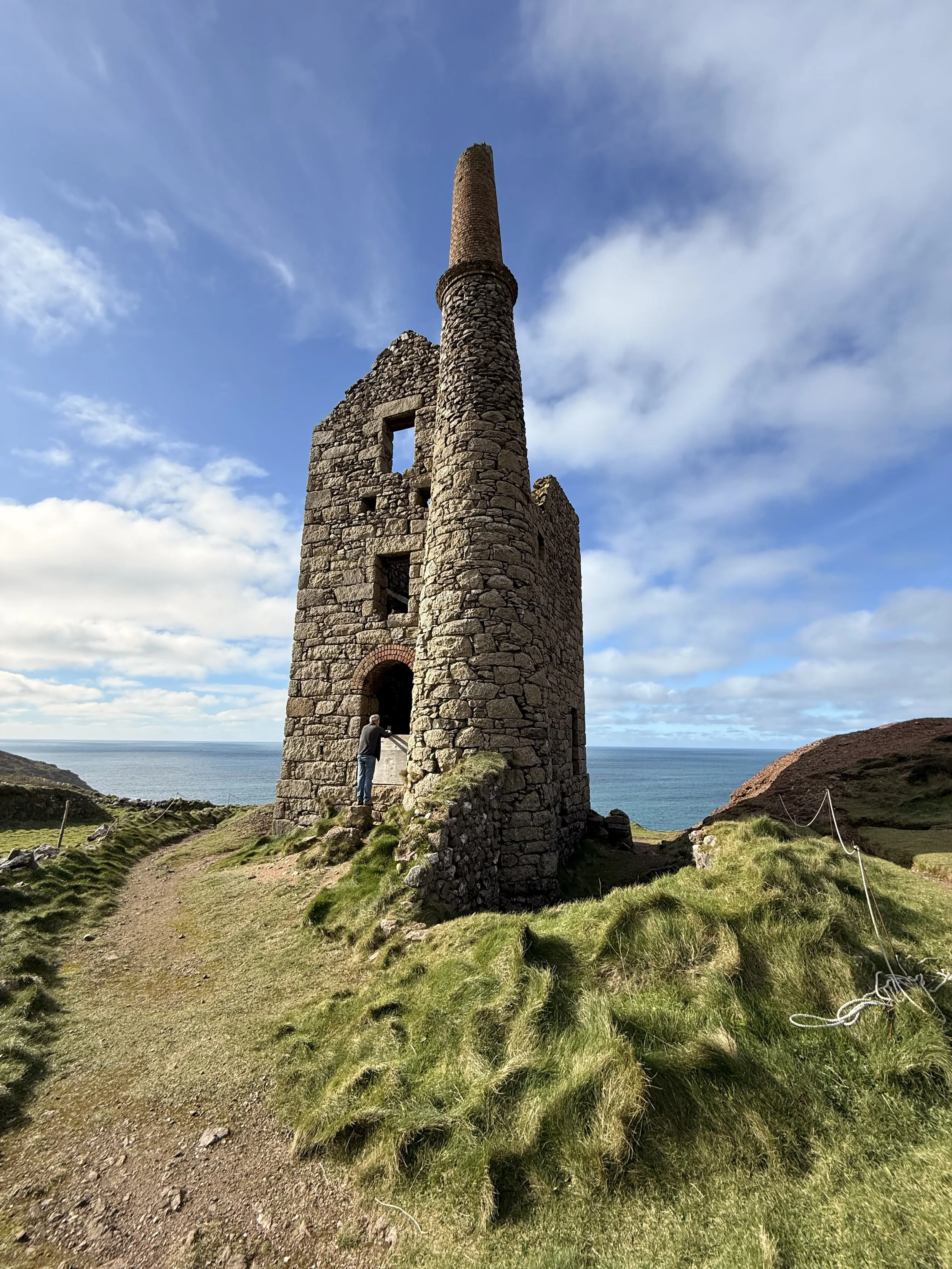
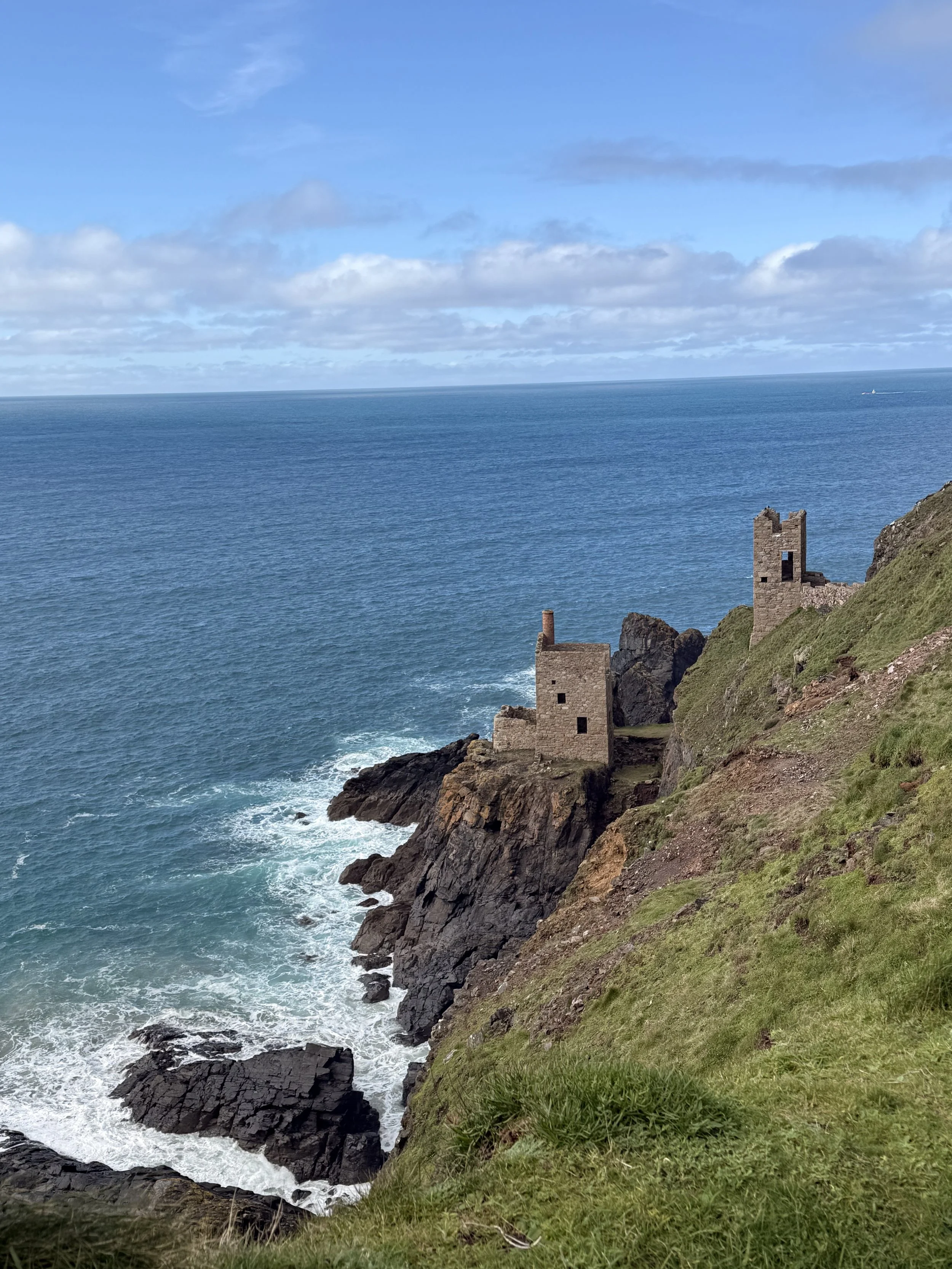
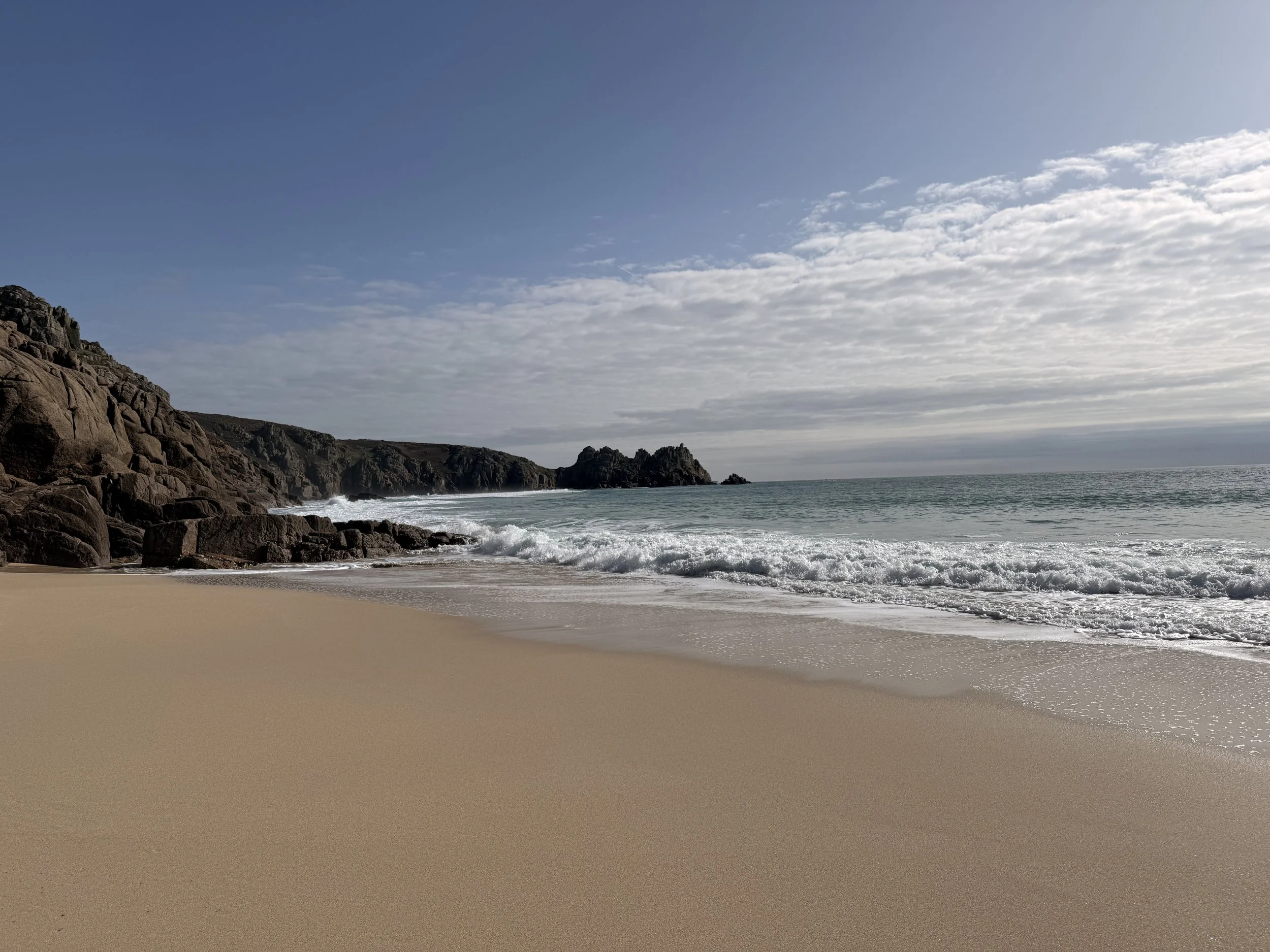
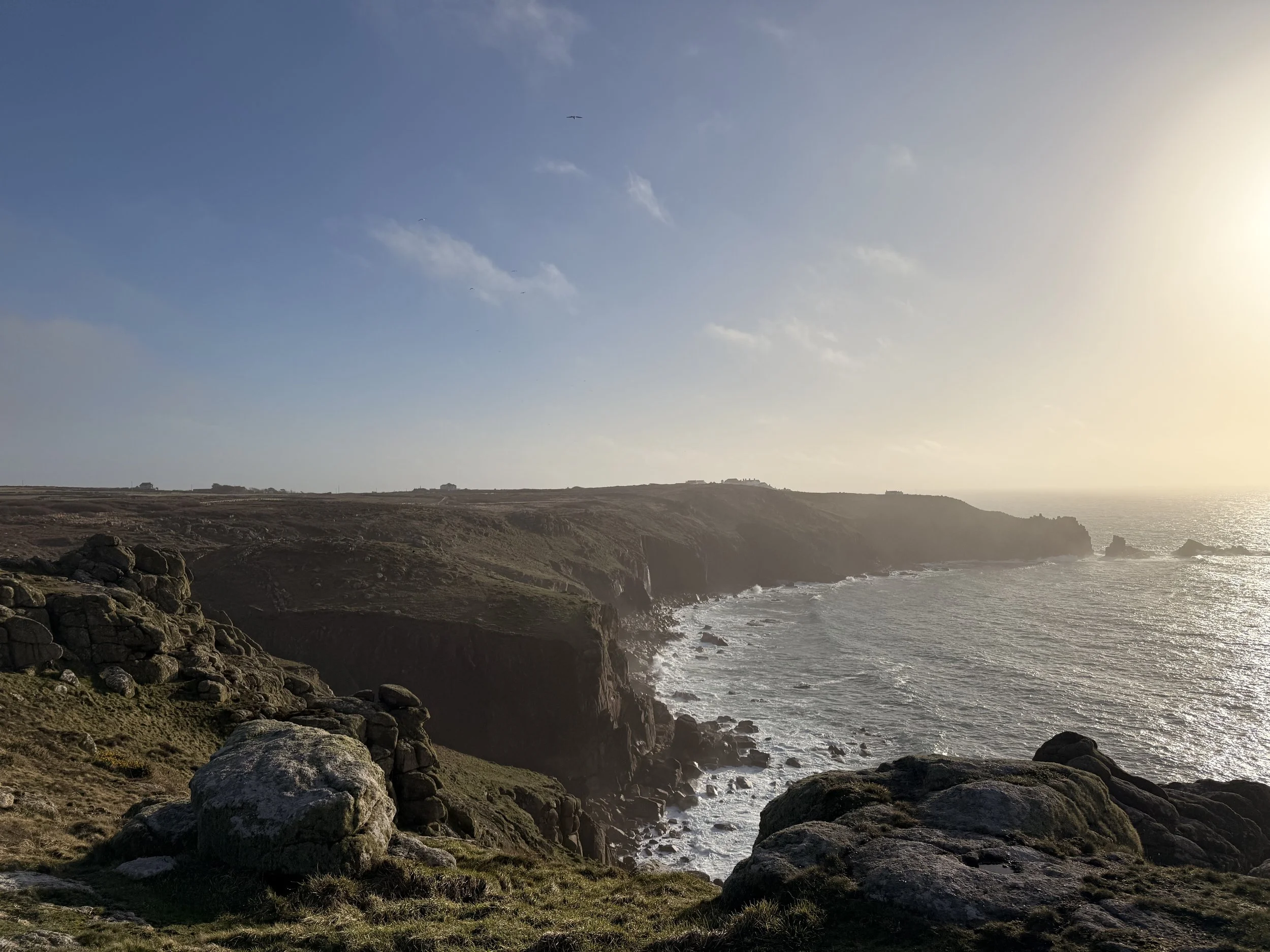
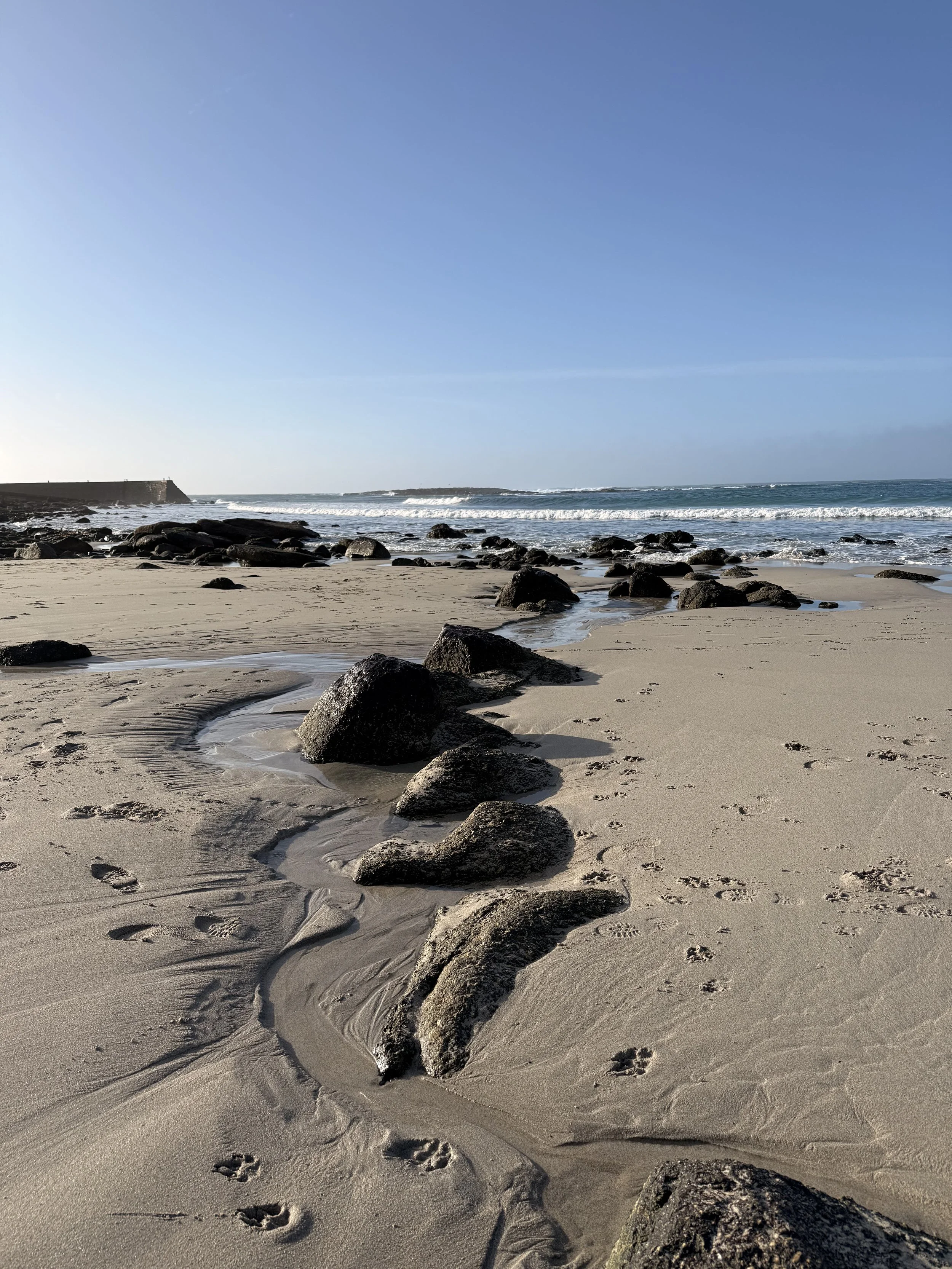
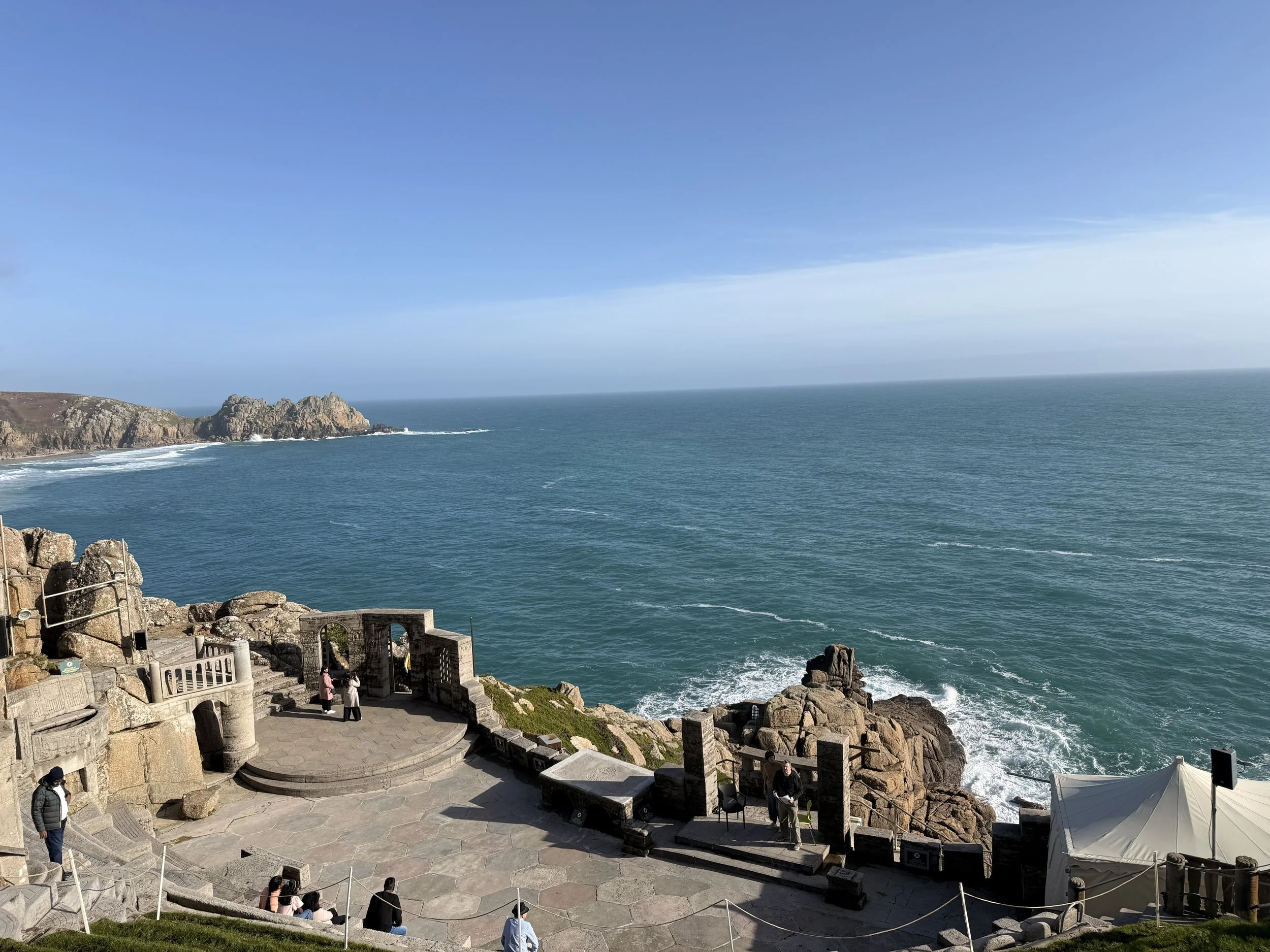
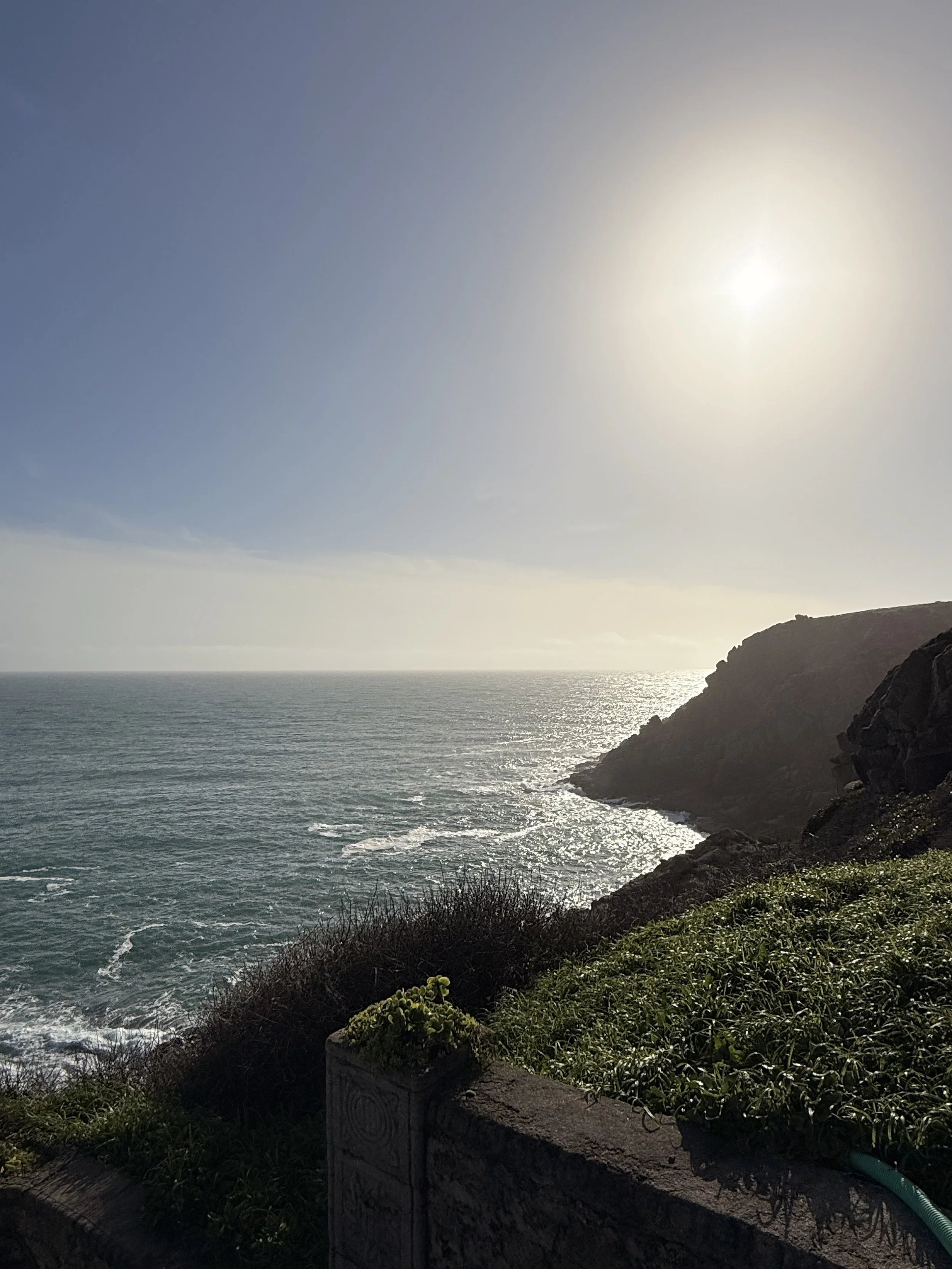
The Cornish landscape—its wild weather, shifting seas, and vast horizons—mirrored the emotional atmosphere of his work. The mood of West Penwith appears in his writing as an allegory for uncertainty, danger, isolation, betrayal and loyalty. The remoteness of this most south westerly part of Britain’s mainland was an important perspective. David Cornwall often described the Cornish coast as a vantage point: a lookout from which he could observe national politics with detachment, clarity, and occasionally, dismay.
Living in Cornwall sharpened his awareness of regional neglect, inequality, and the pressures facing remote communities. These concerns feed directly into novels like The Constant Gardener and Our Kind of Traitor, where institutional betrayal and exploitation feature heavily. Cornwall’s ruggedness, resilience, and vulnerability to outside forces became metaphors in his political thinking.
His affection for Cornwall translated into activism: he donated half a mile of his own coastline to the National Trust to protect it from development. Locals recall seeing him at places like the Gurnard’s Head Inn, quietly absorbing the rhythm of coastal life.
A Life’s End in the County He Loved
David Cornwell died on December 12, 2020, in Truro, Cornwall, at the age of 89. He left behind not only a body of work that reshaped modern fiction but also a coastline protected by his care and a region that shaped his perspectives until the end of his life.
Legacy
David Cornwall didn’t just write about spies—he wrote about human beings navigating systems of power, duplicity, and loss. His work remains essential reading for anyone interested in the moral ambiguities of the 20th century.
From the cloisters of Oxford to the windswept cliffs of Cornwall, David Cornwell lived a life steeped in observation, secrecy, and storytelling. His landscapes—emotional and geographical—infused his fiction with rare authenticity.
And George Smiley, brought to life by Alec Guinness decades ago, remains a quiet testament to a writer who understood that the coldest wars are often fought within.
Cornwall shaped John le Carré’s writing in ways that were subtle, profound, and enduring. It wasn’t simply the place where he lived—it was the landscape that helped him see Britain more clearly and gave emotional depth to the worlds he created.
Bespoke Tours
Interested in David Cornwell (John le Carré) and the world of espionage? Join me for a focused tour of Oxford, including Lincoln College, to trace the life and influences behind his writing. For the travelling enthusiast, I also offer a guided trip to Cornwall to explore the landscapes that became his place of refuge and uncover a surprising local history tied to intelligence and secrecy.
Contact me to discuss dates, itinerary options, group sizes, and customisations—whether you prefer a single-day Oxford visit, a combined Oxford–Cornwall itinerary, or a deeper multi-day exploration. I’ll provide practical details on transport, accommodation suggestions, accessibility, and pricing to help plan a memorable and insightful trip.
Email: sara@jerichorose.co.uk
Visit Tradecraft at the Weston Library before it finishes on the 6th April. Entry is free and the exhibits at the back of Blackwell Hall (Weston Library, Broad St) are open to the public seven days a week. Tradecraft' is the word David Cornwell used to describe the techniques of espionage. The exhibit is a fascinating insight into the life and writing process of David Cornwell, co-curated by Professor Federico Varese and Dr Jessica Douthwaite, based on the archives held by the Bodleian Library.